Walk into a busy restaurant during peak service and you’ll notice something interesting. While guests see plates moving quickly out of the kitchen and servers navigating crowded dining rooms, managers are constantly making dozens of operational decisions in the background.
How much inventory should be prepped for the dinner rush? Are staffing levels sufficient if orders suddenly spike? Which menu items are actually driving profitability?
For decades, restaurant operators relied heavily on experience and instinct to answer these questions. A seasoned manager could often “read” the rhythm of a restaurant simply from years of working the floor.
Today that intuition is increasingly supported by data.
Large brands such as Domino’s, Starbucks, and McDonald’s have invested heavily in technology platforms that analyse sales patterns, predict customer demand, and optimize operations in real time. According to research published by Deloitte’s Restaurant Industry Outlook, AI-driven analytics is quickly becoming one of the most influential operational tools in modern hospitality businesses.
What’s changing now is that these technologies are no longer limited to global chains.
A new generation of restaurant software platforms is bringing AI-powered tools to independent restaurants, regional chains, and hospitality groups of all sizes. From forecasting ingredient demand to automating phone orders, artificial intelligence is beginning to solve some of the most persistent operational challenges restaurants face every day.
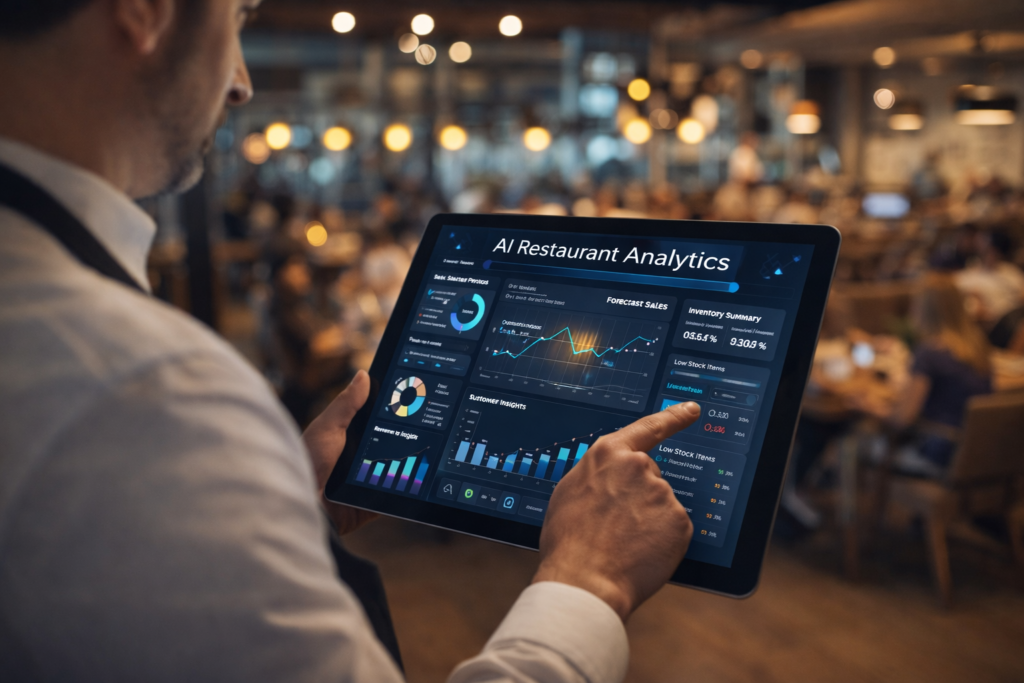
The tools below represent some of the most practical AI technologies restaurants are using today to improve efficiency, reduce waste, and better understand their customers.
1. ChatGPT for Menu Development and Marketing
Many restaurant operators have started experimenting with AI writing tools like ChatGPT to speed up marketing and menu development.
While chefs still lead the creative process, AI can assist with drafting menu descriptions, promotional campaigns, and website content. Restaurants that frequently rotate seasonal dishes often use AI to generate first drafts of menu descriptions that highlight ingredients, cooking techniques, and flavour profiles.
Marketing agencies that work with restaurant brands increasingly use AI-assisted tools to help restaurants maintain consistent online engagement across social media, email campaigns, and digital menus.
2. Slang.ai for Automated Phone Ordering
Phone calls remain one of the most overlooked operational bottlenecks in restaurants. During peak hours, staff often struggle to answer calls while also managing dine-in service, delivery orders, and kitchen coordination.
Slang.ai is a voice AI platform built specifically for restaurants. It automatically answers phone calls, handles reservation requests, and responds to frequently asked customer questions.
Restaurants that implement automated call systems often see fewer missed calls and faster customer response times. In busy restaurants where staff cannot always reach the phone quickly, voice automation ensures that every call is handled consistently.
3. Popmenu for AI-Driven Restaurant Marketing
Popmenu is widely used by restaurants to manage online menus, websites, and digital marketing campaigns.
The platform uses AI-assisted tools to help restaurants create promotional campaigns based on customer behavior and ordering patterns. For example, if the system detects that certain menu items perform better during specific days of the week, restaurants can create targeted promotions around those trends.
Restaurant technology analysts often cite Popmenu as a strong example of how AI is becoming embedded within everyday restaurant operations rather than existing as a standalone technology layer.
4. ClearCOGS for Demand Forecasting
Forecasting demand has always been one of the most difficult operational challenges for restaurants.
ClearCOGS is a demand forecasting platform designed specifically for the hospitality industry. It analyses historical sales data, weather patterns, seasonal trends, and local events to predict future ingredient demand.
By predicting how much food will likely be sold in the coming days, restaurants can prepare more accurate purchasing orders and reduce waste. Multi-location restaurant groups often rely on forecasting platforms like ClearCOGS to standardize purchasing decisions across locations.
Major brands such as Chipotle and Panera Bread have invested heavily in predictive analytics systems for similar operational insights.
5. Tenzo for Restaurant Data Analytics
Tenzo is a restaurant analytics platform that integrates directly with POS systems such as Toast, Square, and Lightspeed.
Instead of manually analyzing spreadsheets, restaurant operators receive automated insights about sales patterns, labor efficiency, and menu performance.
The platform identifies patterns that might otherwise go unnoticed. For example, restaurants often discover that certain dishes perform significantly better on specific days of the week or during particular weather conditions.
These insights allow operators to adjust staffing schedules, purchasing decisions, and menu design more effectively.
6. Toast Analytics for Operational Insights
Toast has become one of the most widely adopted POS platforms in the restaurant industry.
Beyond order processing, Toast provides powerful analytics tools that help restaurants track sales trends, menu performance, and Labor costs.
Modern POS systems are increasingly incorporating AI-driven reporting features. Instead of simply displaying raw data, the software can highlight anomalies, identify emerging trends, and suggest operational adjustments.
For restaurant groups managing multiple locations, this type of data visibility significantly improves decision-making across the organization.
7. 7shifts for AI-Assisted Staff Scheduling
Labor is one of the largest expenses for restaurants. Efficient scheduling can dramatically impact profitability.
7shifts is a workforce management platform designed specifically for restaurant teams. Its scheduling system analyses historical sales data, predicted demand, and labor targets to recommend optimized shift schedules.
Managers can quickly build schedules that align with forecasted demand while also accommodating employee availability and labor budgets.
Many restaurant groups use workforce management platforms like 7shifts to maintain consistency across multiple locations.
8. SoundHound AI for Voice Ordering
Voice ordering technology is becoming more common in fast-service restaurants and drive-thru environments.
SoundHound AI has developed voice-recognition platforms that allow customers to place orders using conversational interfaces. These systems can be integrated into drive-thru lanes, phone ordering systems, and digital kiosks.
Restaurants testing voice-ordering systems often report improved order accuracy and faster service times.
9. Presto Automation for AI Drive-Thru Systems
Presto Automation focuses on AI-powered ordering systems for drive-thru restaurants.
The platform uses voice recognition technology to take orders, confirm order details, and transmit orders directly to the kitchen system.
Several restaurant chains have experimented with AI-driven drive-thru systems as a way to reduce Labor pressure and improve service speed.
As Labor shortages continue across the hospitality industry, automation technologies like these are becoming increasingly attractive to operators.
10. AI Chatbots for Customer Support and Reservations
Many restaurants now use AI chatbots on their websites to handle common customer inquiries.
These tools can answer questions about menu items, operating hours, reservations, and ordering options instantly. Chatbots also help restaurants respond to customer questions outside of normal operating hours.
While these systems are relatively simple compared to advanced AI platforms, they provide meaningful operational value by improving customer responsiveness and reducing staff workload.
The Growing Role of AI in Restaurant Operations
Artificial intelligence will not replace the creativity and hospitality that define the restaurant experience. Kitchens will always rely on the judgment and instincts of chefs and managers who understand their customers.
What AI can provide is better operational insight.
By analysing patterns across thousands of transactions, modern restaurant technology platforms help operators make smarter decisions about inventory, staffing, marketing, and menu performance.
As these tools continue to evolve, AI will likely become a standard component of restaurant management rather than a niche technology experiment.
For restaurant owners focused on improving efficiency and profitability, understanding how these tools work — and where they deliver real operational value — will be an important part of staying competitive in the years ahead.
For a broader look at how artificial intelligence is transforming restaurant operations, see our guide on How Restaurants Are Using AI Tools in 2026 to Improve Operations.