On a busy Friday night in any restaurant, the point-of-sale system quietly becomes the command center of the entire operation. Orders flow from servers to the kitchen, payments move through terminals, modifiers update tickets, and reports begin tracking performance in real time. When the POS system works seamlessly, service feels effortless. When it fails, the entire restaurant feels it instantly.
For small restaurants today, a POS system is no longer just a payment terminal. Modern platforms manage inventory, track staff performance, integrate with online ordering apps, and provide deep insights into menu performance and customer behavior.
In 2026, cloud-based POS systems dominate the industry. Independent restaurants now have access to the same level of technology that large chains once used, including advanced reporting, automation tools, and AI-driven insights.
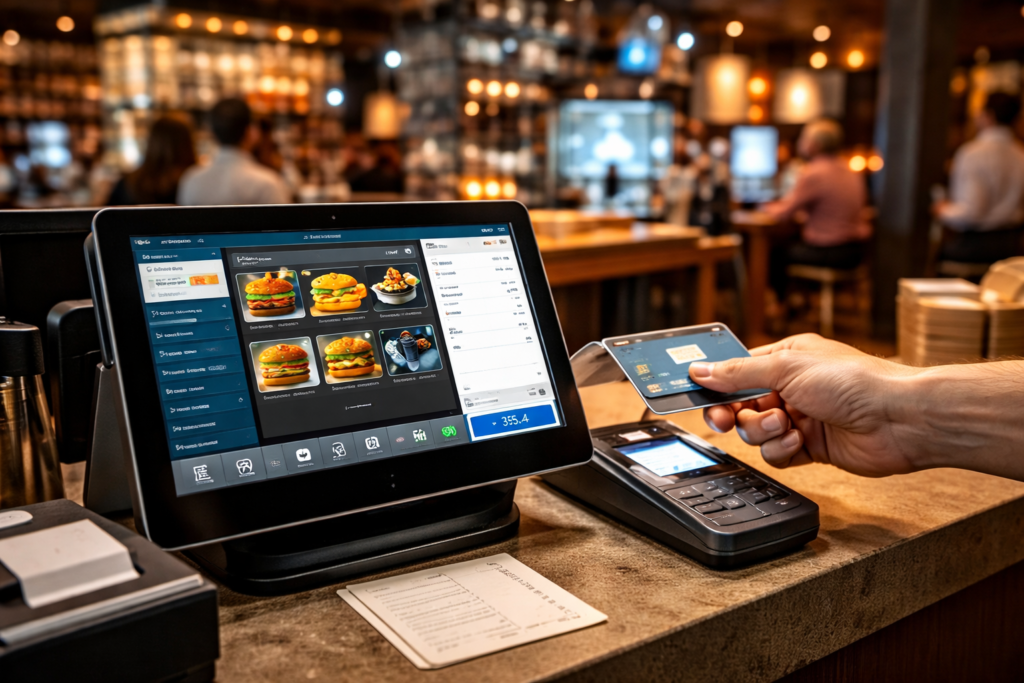
Below are the best restaurant POS systems for small businesses, based on usability, integrations, reporting capabilities, and long-term scalability.
1. Toast POS
Toast has become one of the most widely adopted POS platforms in the restaurant industry. Designed specifically for foodservice operations, it offers a full ecosystem of tools that includes online ordering, kitchen display systems, payroll integration, and advanced analytics.
What makes Toast particularly appealing to small restaurants is its ability to scale as the business grows. Operators can begin with a basic POS setup and gradually add modules such as loyalty programs, delivery integrations, and workforce management.
Key features
- Restaurant-specific POS interface
- Built-in online ordering and delivery tools
- Kitchen display system integration
- Detailed sales and performance analytics
Best for: small restaurants planning to scale into multi-location operations.
2. Square for Restaurants
Square has become a popular starting point for independent restaurants because of its simplicity and transparent pricing structure.
The platform is easy to set up and works well for cafés, quick-service restaurants, and food trucks. Square also integrates smoothly with delivery services and accounting software, making it a practical solution for operators who want a lightweight but capable system.
Key features
- Fast and simple onboarding
- Flexible hardware options
- Built-in inventory tracking
- Strong third-party integration ecosystem
Best for: small restaurants looking for a straightforward and affordable POS solution.
3. Lightspeed Restaurant
Lightspeed stands out for its powerful reporting and analytics capabilities. Many operators choose Lightspeed because it helps them understand not just sales numbers but deeper operational metrics such as menu performance and staff productivity.
The system also offers strong inventory management features, which makes it particularly useful for restaurants that want tighter control over food costs.
Key features
- Advanced reporting dashboards
- Detailed menu engineering tools
- Real-time inventory tracking
- Multi-location management capabilities
Best for: restaurants that want strong operational insights and data-driven decision making.
4. TouchBistro
TouchBistro is designed for restaurants that prefer an intuitive, service-focused POS interface without unnecessary complexity.
The platform runs on iPad devices and offers features that help streamline table service, including tableside ordering, reservation management, and staff scheduling tools.
Key features
- iPad-based POS system
- Tableside ordering capabilities
- Built-in reservation management
- Staff scheduling tools
Best for: full-service restaurants that want a user-friendly POS platform.
5. Clover POS
Clover offers a flexible POS ecosystem with customizable hardware and an extensive marketplace of apps.
This modular approach allows restaurants to build a POS setup that fits their specific needs. Businesses can add tools for loyalty programs, marketing automation, or inventory tracking as they grow.
Key features
- Customizable hardware options
- App marketplace with many integrations
- Built-in loyalty program tools
- Secure payment processing
Best for: restaurants that want flexible hardware and customizable software options.
How to Choose the Right POS System
Selecting a POS system involves more than comparing prices. Restaurant operators should focus on four critical factors:
- Operational fit
Choose a system designed for your service model, whether it’s quick service, casual dining, or fine dining.
- Integration ecosystem
The POS should integrate with delivery apps, accounting tools, inventory systems, and marketing platforms.
- Reporting capabilities
Good reporting tools help operators understand menu performance, sales trends, and staff productivity.
- Scalability
A POS system should grow with your business as new locations or services are added.
Final Thoughts
Restaurant technology continues to evolve rapidly, and the POS system now sits at the center of restaurant operations.
For small restaurants, the right POS platform can streamline service, reduce operational errors, and unlock valuable insights about customer behavior and menu performance.
As automation and AI-driven analytics continue to expand across the industry, modern POS systems are becoming more than payment processors. They are increasingly becoming the operational intelligence layer that helps restaurants run smarter and more efficiently.
As restaurants adopt more automation and AI tools, POS systems increasingly act as the central hub connecting inventory systems, analytics platforms, and ordering technologies, want to know more about this? How Restaurants are Using AI Tools in 2026 to Improve Operations