Most restaurant owners don’t realize where their profits disappear until it’s too late.
It’s not always rent. It’s not always labor.
More often than not, it’s inventory.
Over-ordering, spoilage, inaccurate stock counts, and poor demand forecasting quietly eat into margins every single day. In a high-volume restaurant, even small inefficiencies in inventory management can translate into thousands in monthly losses.
In 2026, inventory management is no longer a manual process of spreadsheets and guesswork. Modern restaurant inventory software uses automation, real-time tracking, and increasingly AI-driven forecasting to help operators stay in control.
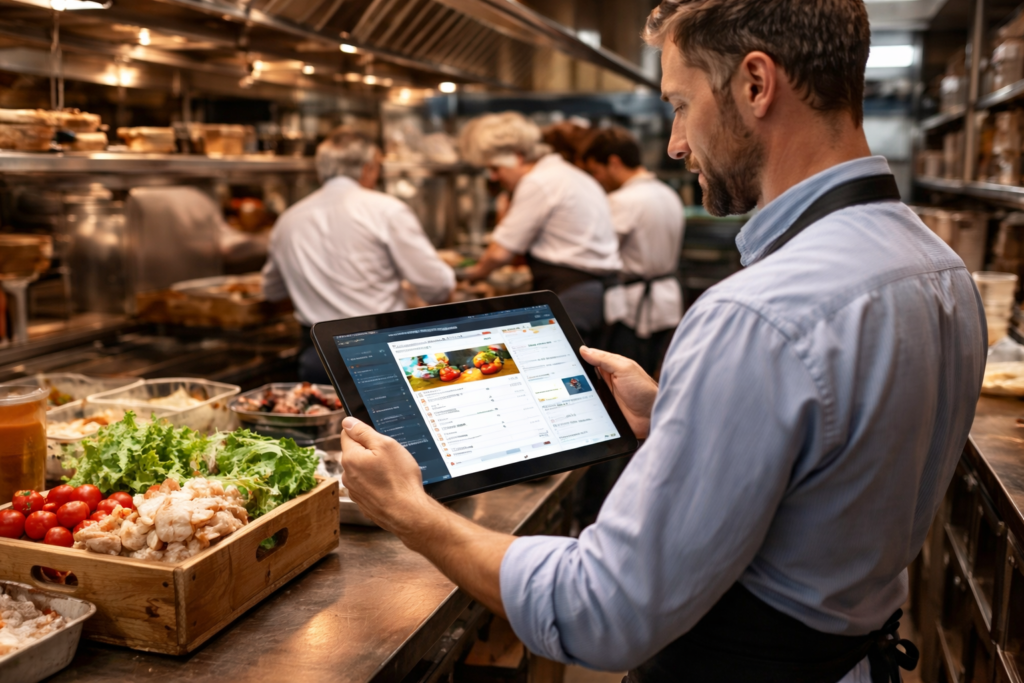
Below are the best restaurant inventory management software solutions, based on usability, integrations, forecasting capabilities, and operational impact.
1. MarketMan
MarketMan is one of the most widely used inventory management platforms in the restaurant industry. It offers a complete solution for tracking stock, managing suppliers, and analyzing food costs.
The platform integrates seamlessly with POS systems, allowing restaurants to automatically deduct inventory based on sales data.
Key features
- Real-time inventory tracking
- Supplier and order management
- Food cost analysis and reporting
- POS integration
Best for: restaurants that want a complete inventory and supplier management system.
2. ClearCOGS
ClearCOGS focuses heavily on predictive analytics and demand forecasting. Instead of just tracking inventory, it helps restaurants understand how much they should be ordering based on historical sales and future demand.
This makes it particularly powerful for reducing waste and optimizing purchasing decisions.
Key features
- AI-driven demand forecasting
- Automated ordering recommendations
- Sales and inventory data integration
- Waste reduction insights
Best for: restaurants looking to use AI for smarter inventory decisions.
3. xtraCHEF by Toast
xtraCHEF is part of the Toast ecosystem and focuses on invoice processing, cost control, and financial visibility.
The platform automates data entry from invoices and provides insights into food costs, making it easier for operators to track profitability at a detailed level.
Key features
- Automated invoice processing
- Food cost tracking
- Integration with Toast POS
- Detailed financial insights
Best for: restaurants already using Toast and looking for integrated cost control tools.
4. BlueCart
BlueCart is designed to simplify purchasing and supplier management while also providing inventory tracking capabilities.
The platform allows restaurants to order from multiple suppliers in one place and track inventory levels across locations.
Key features
- Supplier marketplace integration
- Order and inventory tracking
- Multi-location support
- Real-time stock visibility
Best for: restaurants that want to streamline procurement and inventory together.
5. Upserve Inventory
Upserve offers a combination of inventory tracking and restaurant analytics, helping operators understand not just what they have in stock, but how it impacts overall performance.
It integrates with POS systems and provides insights into menu profitability and inventory usage.
Key features
- Inventory and analytics integration
- Menu performance tracking
- POS integration
- Real-time reporting
Best for: restaurants that want inventory insights connected to overall business performance.
How to Choose the Right Inventory Software
Choosing inventory software depends on your operational needs. Here are the key factors to consider:
- Integration with POS systems
- The software should sync with your POS to automate stock updates.
- Forecasting capabilities
- Advanced tools use data to predict demand and reduce over-ordering.
- Ease of use
- Staff should be able to update and manage inventory without complexity.
- Supplier management
- Built-in ordering systems can simplify procurement and reduce errors.
Final Thoughts
Inventory management is one of the most overlooked areas in restaurant operations, yet it has one of the biggest impacts on profitability.
The shift toward AI-powered forecasting and automation is changing how restaurants manage stock. Instead of reacting to shortages or waste, operators can now make proactive decisions based on real data.
For restaurants looking to improve margins, reduce waste, and gain better control over operations, investing in the right inventory management software is no longer optional. It’s becoming essential. Explore more here: Best Restaurant POS Systems for Small Businesses (2026)