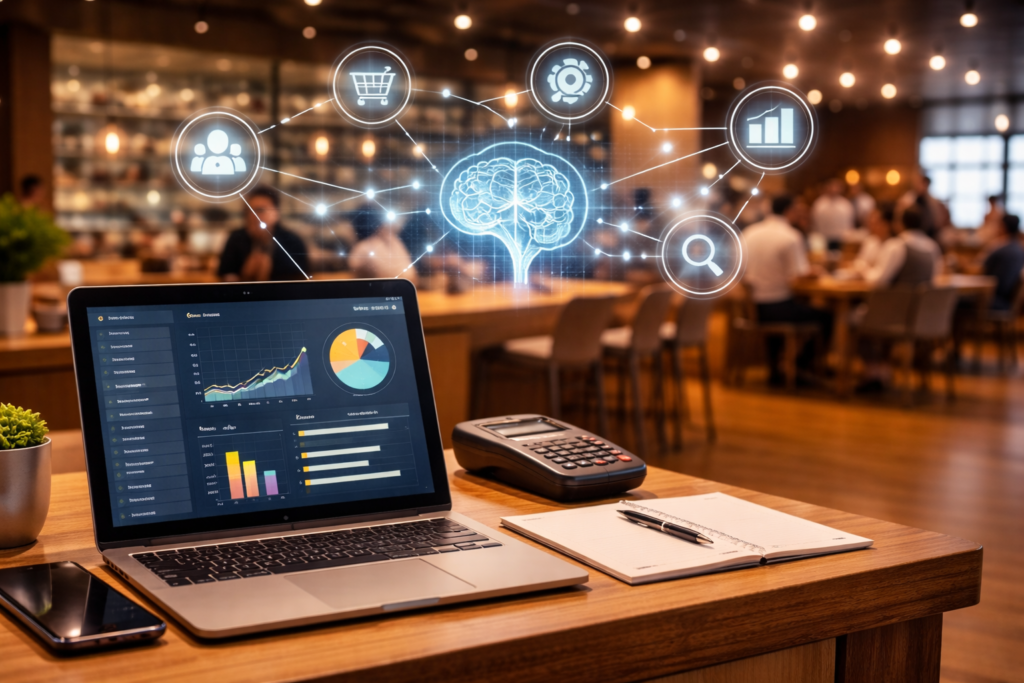
Artificial Intelligence is no longer a futuristic concept in the restaurant industry. Over the past few years, many restaurant operators have started using AI-powered tools to improve efficiency, reduce food waste, and better understand customer behaviour.
From large global brands to independent restaurants, technology is becoming an essential part of modern restaurant management. According to industry reports from companies like Toast and Square, restaurants that actively use data and automation tools tend to operate more efficiently and make better pricing and staffing decisions.
In this article, we’ll explore some of the most practical ways AI is being used in restaurants today.
AI-Powered Customer Interaction
One of the most common applications of AI in restaurants is customer communication. Many restaurants now use automated chat systems on their websites or social media platforms to handle reservations, respond to frequently asked questions, and guide customers through menu options.
Large restaurant chains and hospitality groups increasingly rely on conversational AI to manage high volumes of customer inquiries without increasing staffing costs. These systems can operate 24/7 and help maintain consistent response times.
Smarter POS Systems and Data Analytics
Modern point-of-sale platforms such as Toast and Square have introduced analytics tools that use machine learning to help restaurants understand sales patterns and customer behaviour.
Restaurant operators can analyse:
- Peak ordering times
- Most profitable menu items
- Customer ordering trends
- Seasonal demand patterns
This type of data allows restaurant managers to optimize menus and improve operational efficiency.
AI-Driven Inventory Management
Inventory control has always been one of the biggest operational challenges for restaurants. AI-driven inventory systems can now analyse historical sales data and predict ingredient usage more accurately.
By forecasting demand, restaurants can reduce food waste and avoid stock shortages. Some restaurant groups also use predictive purchasing tools that automatically recommend ordering quantities based on expected sales.
AI in Restaurant Marketing
Restaurant marketing has also been transformed by artificial intelligence. Marketing platforms now analyse customer purchase behaviour to create personalized promotions and loyalty programs.
Instead of sending the same promotion to every customer, restaurants can target specific customer segments based on their ordering history and preferences.
This type of targeted marketing often leads to higher engagement and better repeat customer rates.
AI-Assisted Workforce Scheduling
Labor is one of the largest expenses for restaurants. AI-based scheduling tools help restaurant managers plan staffing levels based on expected demand, weather forecasts, and historical sales patterns.
By predicting busy periods more accurately, restaurants can schedule the right number of staff without over-staffing during slow hours.
Final Thoughts
Artificial intelligence is quickly becoming a practical tool for restaurant operators rather than just an emerging trend. Restaurants that embrace technology are often able to operate more efficiently, make smarter decisions using data, and provide a better overall customer experience.
While AI will never replace the human element that defines hospitality, it can give restaurant teams the tools they need to run more efficient and profitable businesses.
Restaurants are increasingly adopting specialised platforms designed for automation, forecasting and operational insights. we explore some of these in our guide on 10 Best AI Tools for Restaurants in 2026