
Choosing the right POS system for your restaurant is one of the most important decisions you’ll make. The wrong system can slow down operations, frustrate staff, and impact customer experience. The right one can streamline your workflow, increase efficiency, and boost profitability.
In this guide, we’ll break down exactly how to choose the best restaurant POS system in 2026.
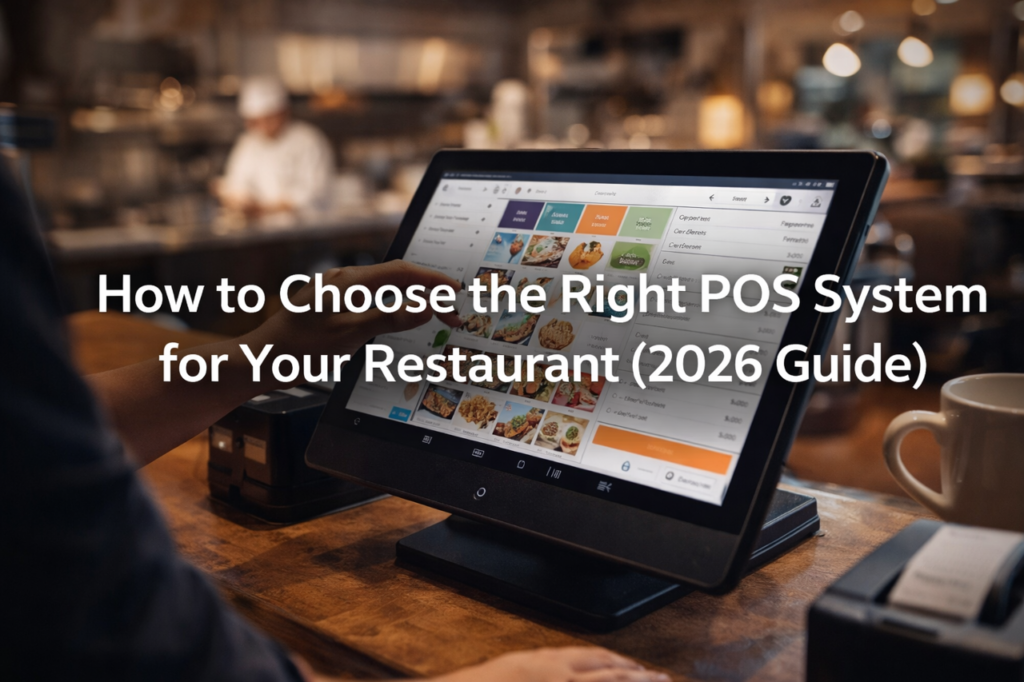
What is a Restaurant POS System?
A restaurant POS (Point of Sale) system is the software and hardware used to manage orders, payments, and daily operations.
Modern POS systems can handle:
- Order management
- Payment processing
- Inventory tracking
- Sales reporting
- Staff management
- Online ordering integration
Today’s POS systems act as the central hub of your restaurant operations.
Key Factors to Consider When Choosing a POS System
1. Pricing and Total Cost
When evaluating POS systems, don’t just look at the monthly subscription.
You should consider:
- Hardware costs (tablets, terminals, printers)
- Software subscription fees
- Payment processing charges
- Add-on features
Some POS systems appear affordable initially but become expensive over time.
2. Features That Match Your Restaurant Needs
Every restaurant is different, so your POS should match your business model.
Key features to look for:
- Table management (for dine-in restaurants)
- Online ordering and delivery integration
- Inventory management
- Real-time analytics and reports
- Multi-location support
Avoid systems with unnecessary features that complicate operations.
3. Ease of Use
A POS system should be easy for your staff to learn and use.
Look for:
- Simple interface
- Fast order processing
- Minimal training required
A complicated system slows down service and leads to errors.
4. Integration with Other Tools
Your POS should integrate with other systems you use.
Important integrations include:
- Food delivery platforms
- Accounting software
- Inventory systems
- CRM and loyalty programs
This reduces manual work and improves accuracy.
5. Customer Support and Reliability
Technical issues can happen at any time.
Choose a POS provider that offers:
- 24/7 customer support
- Quick response times
- Reliable uptime
Good support ensures your operations don’t stop during peak hours.
6. Scalability for Future Growth
Your POS system should grow with your business.
Consider:
- Ability to manage multiple locations
- Upgradable features
- Flexibility for expansion
Choosing a scalable system saves you from switching platforms later.
Common Mistakes to Avoid
Many restaurant owners make these mistakes:
- Choosing the cheapest option instead of the best value
- Ignoring integrations
- Overcomplicating with too many features
- Not testing the system before buying
- Skipping staff training
Avoiding these mistakes will help you make a better decision.
Best POS Systems for Restaurants in 2026
If you’re unsure which system to choose, check our detailed comparison of the top tools:
Best Restaurant POS Systems for Small Businesses (2026)
This guide covers popular options like Toast and Square and helps you compare them based on your needs.
Final Thoughts
A POS system is more than just a billing tool—it’s the backbone of your restaurant operations.
Choosing the right system can:
- Improve efficiency
- Reduce errors
- Increase revenue
- Enhance customer experience
Take your time, evaluate your options carefully, and choose a system that aligns with your business goals.
You can also explore how AI tools and automation are transforming restaurant operations in 2026
FAQ Section
Q. What is the best POS system for restaurants in 2026?
The best POS system depends on your restaurant type, budget, and required features. Popular options include Toast and Square.
Q. How much does a restaurant POS system cost?
Costs vary from free plans to monthly subscriptions plus hardware and transaction fees.
Q. Do I need a cloud-based POS system?
Yes, cloud-based POS systems offer better flexibility, remote access, and scalability.
Q. Can a POS system manage inventory?
Yes, most modern POS systems include inventory management features to track stock in real time.