Why Most Restaurants Fail at Marketing (And Burn Cash Doing It)
Walk into any struggling restaurant and you’ll hear the same line:
“We need to run ads.”
But here’s the uncomfortable truth—ads don’t fix weak marketing foundations.
In fact, most small and new restaurants:
- Jump into paid ads too early
- Have no retention system
- Don’t understand customer acquisition cost (CAC)
- Rely on discounts instead of positioning
The result?
Short-term spikes, long-term losses.
Meanwhile, the restaurants quietly winning in 2026 are doing something very different:
They build organic demand first—then scale.
The Shift: Why Organic Marketing Is Winning in 2026
Industry data and operator trends are pointing in one direction:
- Discovery is happening on Google, Instagram, and TikTok—not billboards
- Customers trust peer reviews and content over ads
- Rising ad costs are making paid campaigns unsustainable for small operators
More importantly:
Organic channels bring high-intent, low-cost, repeat customers
This is exactly why strategies like:
- Local SEO
- Social media content
- Community marketing
…are outperforming traditional advertising in ROI for SMB restaurants.
The 5-Pillar Organic Growth System for Restaurants
This is not theory. This is what actually works across:
- QSR chains
- Cloud kitchens
- Independent cafes
- Delivery-first brands
1. Product-Led Marketing: Your Food Is Your First Ad
Before you think about marketing channels, fix this:
If your product doesn’t look marketable, no strategy will save you.
What High-Growth Restaurants Do Differently
They design menu items for:
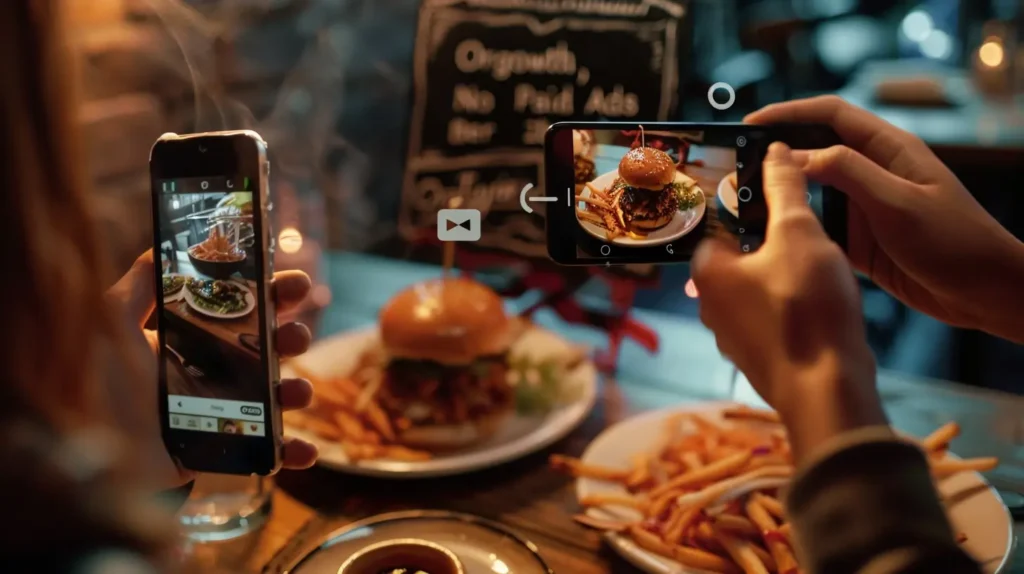
- Visual appeal (contrast, color, texture)
- Camera friendliness (cheese pull, sauce drip)
- Perceived value (portion size, layering)
Think about:
- Korean fried chicken brands
- Smash burger joints
- Loaded fries concepts
Their growth wasn’t ad-driven. It was visual-first product design.
Operator Insight
In your own setup (like Wokaholic), this could mean:
- Adjusting plating for Chinese gravies + fries combos
- Creating 2–3 “hero dishes” designed for reels
- Standardizing presentation across shifts
Pros & Cons
Pros
- Zero marketing cost
- High shareability
- Builds brand identity
Cons
- Requires kitchen discipline
- Needs consistency across branches
2. Social Media as a Revenue Channel (Not Just Branding)
Most restaurants treat social media like a poster board.
Winning restaurants treat it like a sales funnel.
What Actually Works in 2026
Forget polished ads.
What works:
- Raw kitchen videos
- Fast cuts of food preparation
- Customer reactions
- “Day in the life” content
Real Trend Shift
Platforms like Instagram and TikTok are now:
- Discovery engines
- Decision-making tools
Customers don’t search “restaurant near me” first anymore.
They scroll → see → crave → order.
Execution Playbook
- Post 1 reel daily (minimum)
- Focus on:
- Preparation shots
- Close-ups
- Steam, sizzle, sauce
- Use captions like:
- “Worth it or not?”
- “Karachi’s most underrated Chinese?”
Pros & Cons
Pros
- Free reach
- Builds brand recall
- Drives direct orders
Cons
- Requires consistency
- Initial growth is slow
3. Local SEO: The Highest-Intent Traffic You’re Ignoring
This is where most restaurants are leaving money on the table.
How Customers Actually Search
- “Best Chinese near me”
- “Affordable burgers in Karachi”
- “Late night food delivery”
If your restaurant doesn’t show up:
You don’t exist.
What You Must Optimize
- Google Business Profile
- High-quality images
- Menu uploads
- Customer reviews
Real Impact
Restaurants with strong local SEO:
- Get consistent walk-ins
- Reduce dependency on aggregators
- Build long-term visibility
Get a detailed view below:
Local SEO for Small Restaurants: How to Rank on Google Without an Agency
Pros & Cons
Pros
- High-intent traffic
- Free leads
- Long-term ROI
Cons
- Takes 2–6 weeks to build
- Requires active review management
4. Community & Micro-Influencer Marketing
Big influencers are overrated for small restaurants.
The real ROI comes from:
Micro-influencers + local communities
What the Data Shows
Micro-influencers:
- Have higher engagement
- Are more trusted
- Cost significantly less
Real-World Execution
Instead of paying 1 big influencer:
Work with 10 smaller ones:
- 5K–20K followers
- Local audience
- Food-focused content
Smart Partnerships
- Gyms → healthy meals
- Universities → student deals
- Offices → lunch combos
Pros & Cons
Pros
- High trust
- Low cost
- Drives targeted traffic
Cons
- Hard to scale fast
- Requires relationship building
5. Retention Marketing: The Real Profit Driver
This is where chains like KFC and McDonald’s dominate.
Not through ads.
Through systems.
Industry Insight
Returning customers:
- Spend more
- Order more frequently
- Cost less to retain than acquire
What You Should Implement
- WhatsApp broadcast list
- Loyalty rewards (simple, even manual)
- Repeat customer offers
Operator Insight
If you’re doing:
- 100 daily orders
Improving repeat rate by just 15–20% can:
Increase revenue without increasing costs
Get more details by clicking on below link:
How to Calculate ROI on Restaurant Marketing Campaigns
Pros & Cons
Pros
- Highest ROI channel
- Predictable revenue
- Strong customer loyalty
Cons
- Requires data tracking
- Needs consistency
Organic vs Paid Marketing: What Actually Works?
| Factor | Organic Marketing | Paid Ads |
|---|---|---|
| Cost | Low / Free | High |
| ROI | Long-term compounding | Short-term spike |
| Trust | High | Low |
| Sustainability | Strong | Weak |
Expert Perspective
The smartest operators don’t avoid ads.
They delay them.
Build organic → validate demand → scale with ads
30-Day Organic Growth Plan (Actionable)
Week 1–2:
- Optimize Google Business Profile
- Start posting daily reels
- Fix product visuals
Week 3:
- Collaborate with micro-influencers
- Push for reviews
Week 4:
- Launch retention strategy
- Analyze top-performing content
Final Verdict
If you’re:
- A small restaurant
- A new operator
- Or running on tight margins
Organic marketing is not optional.
It is your primary growth engine.
The Real Edge
Restaurants that win in 2026 don’t spend more.
They:
- Design better products
- Capture attention organically
- Build loyal communities