I’ve walked into restaurants that were packed wall to wall…
orders flying in, kitchen fully loaded, team moving non-stop.
From the outside, everything looked like success.
But when we opened the numbers, the story changed.
Margins stuck at 8–10%.
Food cost quietly creeping up.
Staff working harder—but not smarter.
And the owner?
Completely unaware of where the money was actually going.
That’s when it becomes clear:
Most restaurants don’t struggle because of food or demand.
They struggle because their operations are built on effort—not systems.
After working closely with both large chains and independent operators, one thing stands out:
The restaurants that scale profitably are not the busiest ones.
They’re the ones running on invisible systems.
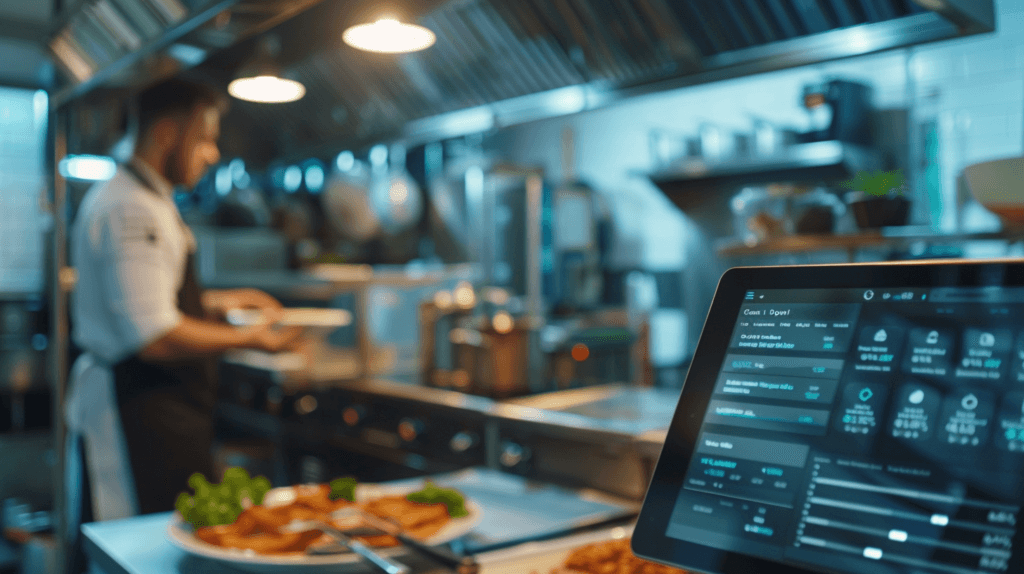
The Biggest Misconception: “Busy Means Profitable”
This mindset quietly kills margins.
You see:
- Full dining areas
- High delivery volume
- Constant kitchen activity
And assume performance is strong.
But behind the scenes:
- Over-portioning is happening daily
- Staff is misaligned with demand
- High-margin items are not being pushed
- Waste is invisible
Activity ≠ Efficiency
Revenue ≠ Profit
The operators who understand this early… build systems around it.
What Actually Separates High-Performing Restaurants
It’s not talent.
It’s not luck.
It’s not even brand.
It’s operational design.
The best operators don’t react to problems.
They build systems that prevent them.
Let’s break down the exact systems.
System 1: Real-Time Visibility (Not End-of-Day Guesswork)
Most SMB owners review numbers at the end of the day.
By then, the damage is already done.
High-performing restaurants operate differently:
- Live sales tracking
- Hour-by-hour performance visibility
- Instant stock movement
Real-world impact:
If your fastest-moving SKU spikes at 7 PM,
you don’t find out tomorrow—you adjust immediately.
This level of control comes from modern POS systems:
Best POS Systems for Small Restaurants Under $50/Month (2026 Guide)
System 2: The Silent Profit Killer — Usage Leakage Tracking
This is where most SMB restaurants lose money without realizing it.
Let’s simplify:
- Theoretical usage → what should be used
- Actual usage → what is actually used
The gap?
That’s your lost profit.
In many cases, this gap sits at 5–10% of total cost.
High-performing restaurants track this daily.
Most SMBs don’t track it at all.
This is exactly where inventory systems change the game:
How Restaurant Inventory Software Reduces Food Waste and Saves Costs
System 3: Demand-Based Decisions (Instead of Gut Feel)
Let’s be honest.
Most decisions in small restaurants are made like this:
- “Friday will be busy”
- “Last week we sold this much”
- “Let’s prep a bit extra just in case”
That “just in case” is expensive.
Modern operators:
- Use historical data
- Track patterns
- Leverage forecasting tools
So prep, staffing, and purchasing are aligned with reality.
Deep dive:
AI Demand Forecasting in Restaurants: How It Works
System 4: Menu Engineering as an Operational Lever
Most people treat menu engineering as a marketing exercise.
It’s not.
It’s one of the most powerful operations tools you have.
High-performing restaurants:
- Push high-margin items during peak hours
- Simplify low-performing dishes
- Align prep complexity with kitchen capacity
Example:
A dish that sells well but slows the kitchen can actually reduce total revenue.
That’s where smart menu decisions come in.
Get a more detailed view: Menu Engineering as an Operational Lever: How Smart Restaurants Increase Margins Without Raising Prices (2026)
Related:
Restaurant Menu Engineering Guide (with AI & Tools)
System 5: Kitchen Flow Optimization (Speed = Throughput)
Every extra minute in the kitchen has a cost:
- Slower table turnover
- Delayed delivery orders
- Reduced total output
High-performing kitchens:
- Use clear order systems
- Minimize verbal confusion
- Optimize prep flow
Tools like Kitchen Display Systems (KDS) are not “nice to have” anymore.
They’re efficiency drivers.
Get a detailed view here: How Kitchen Flow Optimization Increases Restaurant Throughput, Cuts Ticket Times, and Protects Margins in 2026
System 6: Owning Demand Instead of Renting It
If most of your orders come from aggregators…
You’re not building a business.
You’re feeding someone else’s platform.
You lose:
- Margin (commissions)
- Customer data
- Retention opportunities
Smart operators:
- Build direct ordering channels
- Capture customer behavior
- Drive repeat orders
Explore:
Best Online Ordering Systems for Restaurants in 2026
System 7: Connected Operations (Where Most SMBs Break)
This is the real difference between average and high-performing restaurants.
Most SMBs use tools.
But those tools operate in silos.
High-performing setups look like this:
- POS updates inventory automatically
- Inventory triggers restocking
- Forecasting adjusts prep
- Scheduling aligns with demand
Everything is connected.
That’s when operations become smooth—and scalable.
Why Most Restaurants Never Build These Systems
Let’s be honest.
It’s not because tools don’t exist.
It’s because:
- Owners delay investing
- Teams resist change
- Systems are built reactively
And over time, complexity builds up.
Practical Playbook (What You Should Do Next)
Forget trying to fix everything at once.
Start here:
Step 1:
Fix inventory tracking (biggest impact area)
Step 2:
Implement a POS with real-time visibility
Step 3:
Start making decisions based on data, not instinct
Step 4:
Gradually connect systems together
The Real Shift
Most restaurant owners think:
“I need to work harder to improve results.”
The best operators think:
“I need systems so results improve automatically.”
That’s the difference.
Final Thought
In 2026, restaurants are no longer just food businesses.
They are operational systems with a kitchen attached.
And the ones that understand this early…
Win.